Buy footballtoday.eu ?
We are moving the project
footballtoday.eu .
Are you interested in purchasing the domain
footballtoday.eu ?
domain@kv-gmbh.de · 0541-91531010
Buy footballtoday.eu ?
Why is it souhaite-t-il and not souhaite-s-il?
In French, the pronoun "il" (he) is combined with the verb "souhaiter" (to wish) to form the phrase "souhaite-t-il" because of the rule of verb inversion in interrogative sentences. When forming a question in French, the subject pronoun and the verb are inverted, so "souhaite-t-il" follows this rule. The "t" is added to create a liaison between the verb and the pronoun, making the pronunciation smoother. **
When do you use il faut and il ne faut pas?
"Il faut" is used to express what is necessary or required, while "il ne faut pas" is used to express what is not allowed or should be avoided. For example, you would use "il faut" to say "il faut étudier pour réussir" (it is necessary to study to succeed), and "il ne faut pas" to say "il ne faut pas fumer dans ce lieu" (smoking is not allowed in this place). These expressions are used to give advice, make recommendations, or set rules. **
Similar search terms for Prosecco-Biologico-Il-Fresco
Top-Angebote
Products related to Prosecco-Biologico-Il-Fresco:



-
What is the difference between il faut que and il faut?
"Il faut" is used to express a general necessity or obligation, while "il faut que" is used to introduce a specific action or event that is necessary or required. For example, "il faut manger" means "it is necessary to eat" in a general sense, while "il faut que tu manges" means "you need to eat" in a specific sense. "Il faut" is used to make a general statement about what is necessary, while "il faut que" is used to specify what needs to be done. **
-
What is the fresco of Franz von Assisi?
The fresco of Franz von Assisi, also known as St. Francis of Assisi, is a famous artwork located in the Basilica of St. Francis of Assisi in Italy. It was painted by the renowned Italian artist Giotto di Bondone in the early 14th century. The fresco depicts the life of St. Francis, who was a revered figure in the Catholic Church for his devotion to poverty, peace, and the environment. The artwork is celebrated for its expressive and emotive portrayal of St. Francis and is considered a masterpiece of medieval art. **
-
What do you think of Fresco Cat Barf?
I think Fresco Cat Barf is a unique and attention-grabbing name for a product. It definitely stands out and is memorable, which could be a good marketing strategy. However, the name might also be off-putting to some customers, especially those who are sensitive to the idea of cat vomit. Overall, it's a bold choice that could potentially work well with the right target audience. **
-
Is the man gay if he drinks Prosecco?
No, a person's sexual orientation is not determined by the type of drink they consume. Enjoying Prosecco or any other beverage does not indicate someone's sexual orientation. It is important to remember that stereotypes and assumptions about someone's sexuality based on their preferences or behaviors are not accurate or respectful. **


What is the fresco of St. Francis of Assisi?
The fresco of St. Francis of Assisi is a famous artwork located in the Basilica of St. Francis in Assisi, Italy. It was painted by the Italian artist Giotto di Bondone in the early 14th century. The fresco depicts the life of St. Francis, a beloved saint known for his humility and devotion to nature. The artwork is considered a masterpiece of Italian art and is a significant cultural and religious symbol. **
How does "il faut" work in French?
"Il faut" is a common expression in French that is used to convey the idea of necessity or obligation. It is followed by an infinitive verb and is used to express what needs to be done or what is necessary in a given situation. For example, "Il faut manger" means "It is necessary to eat." This expression is used to give advice, make suggestions, or express general truths. **
Top-Angebote
Products related to Prosecco-Biologico-Il-Fresco:
-
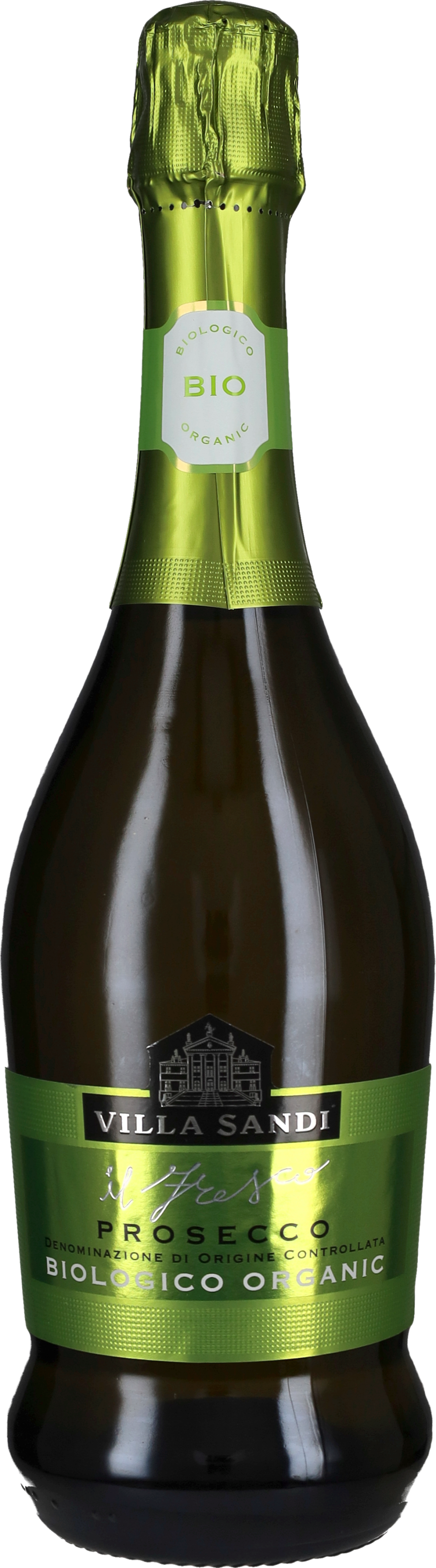
Prosecco Biologico 'Il Fresco' Villa SandiThe Organic Prosecco "Il Fresco" from Villa Sandi originates in the DOC area of Prosecco belonging to the Moretti Polegato family, which has passionately led the winery based in Villa Sandi, a Palladian building from 1622, for three generations. The daily goal is to preserve the tradition in the art of winemaking, while looking towards the future. The unique shape of the bottle communicates elegance and finesse of the product, and the green of the label symbolizes a special connection with the color conventionally associated with nature. The Glera grapes of the Organic Prosecco "Il Fresco" from Villa Sandi are grown on alluvial soils with the presence of marls and skeletons, cultivated under organic farming. The climate is characterized by mild summers and rainy winters, while the sun exposure is excellent and allows for full ripening of the grapes. At harvest, which takes place in the second decade of September, the whole grapes are introduced into the pneumatic press; followed by a soft pressing, from which a must is obtained and storedin steel tanks, later used for sparkling wine. Selected yeasts are then added to the must in the winery, and fermentation begins, followed by bottling and the sparkling process. The Organic Prosecco "Il Fresco" from Villa Sandi presents itself in the glass with a straw yellow color and brilliant reflections with a fine and persistent perlage; the nose is struck by hints of green apple and notes of white flowers; the palate is tickled by a fine and persistent perlage with a pleasant freshness and a well-integrated structure overall. It pairs well with shellfish and fried fish, but also with sushi and fresh cheeses. An excellent product to enjoy on social occasions with friends or during informal aperitifs on carefree summer evenings, to sip a product that is born in a land suited for the production of great sparkling wines.11,00 £*Shipping: 48,00 £Secure redirect to the provider
-
Why is it souhaite-t-il and not souhaite-s-il?
In French, the pronoun "il" (he) is combined with the verb "souhaiter" (to wish) to form the phrase "souhaite-t-il" because of the rule of verb inversion in interrogative sentences. When forming a question in French, the subject pronoun and the verb are inverted, so "souhaite-t-il" follows this rule. The "t" is added to create a liaison between the verb and the pronoun, making the pronunciation smoother. **
-
When do you use il faut and il ne faut pas?
"Il faut" is used to express what is necessary or required, while "il ne faut pas" is used to express what is not allowed or should be avoided. For example, you would use "il faut" to say "il faut étudier pour réussir" (it is necessary to study to succeed), and "il ne faut pas" to say "il ne faut pas fumer dans ce lieu" (smoking is not allowed in this place). These expressions are used to give advice, make recommendations, or set rules. **
-
What is the difference between il faut que and il faut?
"Il faut" is used to express a general necessity or obligation, while "il faut que" is used to introduce a specific action or event that is necessary or required. For example, "il faut manger" means "it is necessary to eat" in a general sense, while "il faut que tu manges" means "you need to eat" in a specific sense. "Il faut" is used to make a general statement about what is necessary, while "il faut que" is used to specify what needs to be done. **
-
What is the fresco of Franz von Assisi?
The fresco of Franz von Assisi, also known as St. Francis of Assisi, is a famous artwork located in the Basilica of St. Francis of Assisi in Italy. It was painted by the renowned Italian artist Giotto di Bondone in the early 14th century. The fresco depicts the life of St. Francis, who was a revered figure in the Catholic Church for his devotion to poverty, peace, and the environment. The artwork is celebrated for its expressive and emotive portrayal of St. Francis and is considered a masterpiece of medieval art. **
Similar search terms for Prosecco-Biologico-Il-Fresco
-
What do you think of Fresco Cat Barf?
I think Fresco Cat Barf is a unique and attention-grabbing name for a product. It definitely stands out and is memorable, which could be a good marketing strategy. However, the name might also be off-putting to some customers, especially those who are sensitive to the idea of cat vomit. Overall, it's a bold choice that could potentially work well with the right target audience. **
-
Is the man gay if he drinks Prosecco?
No, a person's sexual orientation is not determined by the type of drink they consume. Enjoying Prosecco or any other beverage does not indicate someone's sexual orientation. It is important to remember that stereotypes and assumptions about someone's sexuality based on their preferences or behaviors are not accurate or respectful. **
-
What is the fresco of St. Francis of Assisi?
The fresco of St. Francis of Assisi is a famous artwork located in the Basilica of St. Francis in Assisi, Italy. It was painted by the Italian artist Giotto di Bondone in the early 14th century. The fresco depicts the life of St. Francis, a beloved saint known for his humility and devotion to nature. The artwork is considered a masterpiece of Italian art and is a significant cultural and religious symbol. **
-
How does "il faut" work in French?
"Il faut" is a common expression in French that is used to convey the idea of necessity or obligation. It is followed by an infinitive verb and is used to express what needs to be done or what is necessary in a given situation. For example, "Il faut manger" means "It is necessary to eat." This expression is used to give advice, make suggestions, or express general truths. **
* All prices are inclusive of VAT and, if applicable, plus shipping costs. The offer information is based on the details provided by the respective shop and is updated through automated processes. Real-time updates do not occur, so deviations can occur in individual cases. ** Note: Parts of this content were created by AI.